The winner of the Princess of Asturias Award for International Cooperation 2026
The winner of the Princess of Asturias Award for International Cooperation 2026



Humans, without the need for apocalyptic catastrophes, have already extinct several hundred plant and animal species. For example, silphium, one of the first species to disappear, was a plant known in ancient Greece and Rome for its extraordinary medicinal and culinary properties. It was considered a miraculous plant. Unfortunately, sylphium could never be domesticated and only grew in Libya.
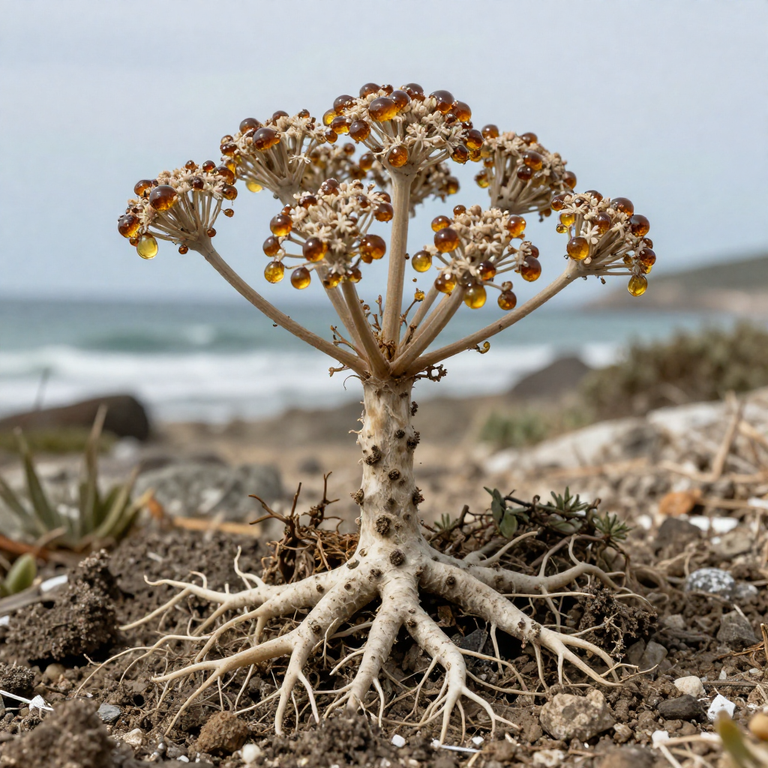

In the end it was so overexploited that it became extinct, the writer Pliny the Elder documented that the last known stem of Silphium was collected and sent to Emperor Nero as an exotic rarity. A few years ago a very similar species was found in Turkey, but it seems that it is a variant and not the original silphium. rocks, then modern medicine would gain a botanical goldmine.


The current chemical analyzes carried out on this genus of plants show that the Romans were not exaggerating anything, silphium hid cutting-edge molecular properties, its potential pharmacological value would be enormous, it could help create new antibiotics, it could help create treatments against cancer or Alzheimer's, it was the holy grail of extinct plants.


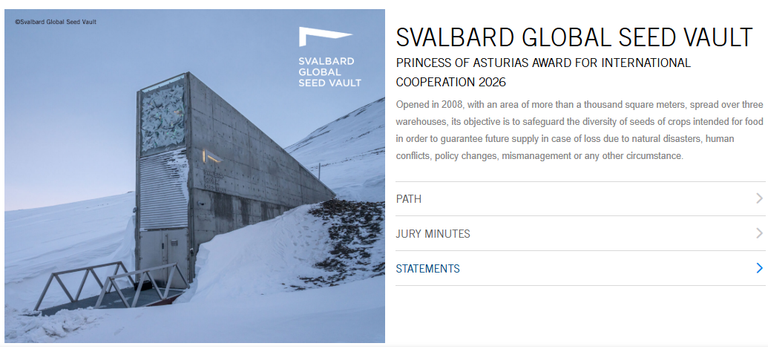
The silphium would have been saved if something similar to what is in the news had existed 2000 years ago. The Svalbar global seed vault, also known as the chamber at the end of the world or the plant Noah's Ark, is in the news because it is the winnerof the Princess of Asturias Award for International Cooperation 2026, the vault is on the island of Spitsbergen in the Svalbard archipelago in Norway, it is on the northern limit of the ocean Atlantic, in fact, Svalbard is where the Arctic Ocean begins.


In that place, duplicates of seeds from gene banks around the world are stored as a security measure, it currently stores more than 1.3 million samples of 6,536 species, many of them are basic food crops, essential for the survival of humanity and it is not yet full. The vault has the capacity to store up to 4 and a half million samples, by the way, despite the name, it is not really a vault, but a set of tunnels and chambers dug into the mountain between 100 to 120 m deep, maintaining a constant temperature of -18ºC.


The Svalbard Vault is a globally supported seed bank. There are dozens of seed banks all over the world, practically every nation on the planet has its own seed bank to protect its plant genetic heritage. The one in Svalbard was created as a plan B in case the other banks failed or if a global or regional catastrophe occurred. For example, in 2015, during the Syrian civil war, the Aleppo National Gene Bank was destroyed and this caused the disappearance of dozens of varieties of local crops, crops that only existed in that region.


Because Syria had sent backup copies to Svalbard, scientists were able to remove the seeds from the vault, sow them in Lebanon and Morocco and thus resurrect those agricultural varieties that had been lost in the destruction of the Aleppo Seed Bank.


The idea of ​​the vault was born in the 80s. Initially it was a small storage in an old abandoned coal mine, the current vault was built in this century and was inaugurated on February 26, 2008, with Norway fully financing its construction. The objective of the vault is to provide security backup, a plan B, as I mentioned before, against the accidental loss of genetic diversity in conventional seed banks, as in the case of Syria, or due to natural disasters, or due to a fire in that seed bank or due to any other type of catastrophe.


Sorry for my Ingles, it's not my main language. The images were taken from the sources used or were created with artificial intelligence


Posted Using INLEO


0
0
0.000
0 comments