The little pink shoes and the lump in the throat that does not loosen with time || Review [Eng/Esp]

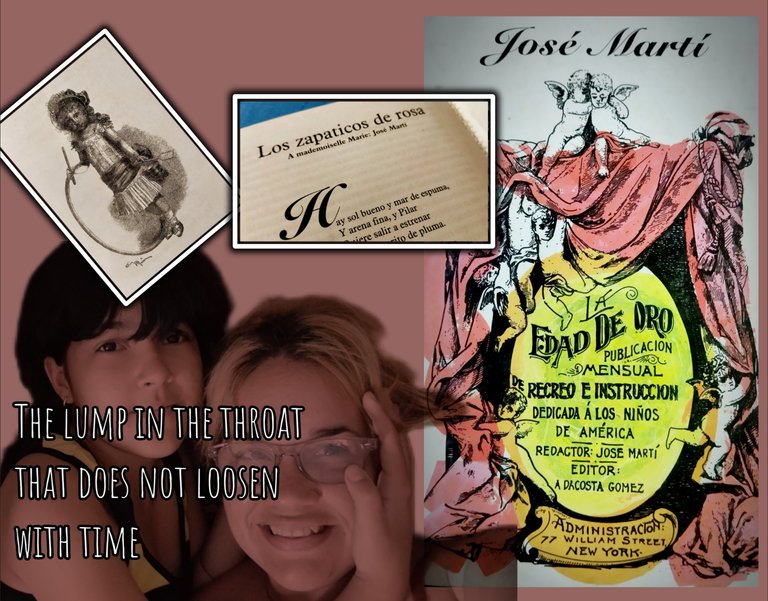
There are texts that return an image you did not expect and that, despite the passage of time, still hurts. The Little Pink Shoes, that poem José Martí included in La Edad de Oro, is one of those for me, because my whole life I have read it with a touch of sadness that settles in my chest like a warm weight. Yesterday, when I revisited it with my teenage daughter, who has begun rereading that book which I myself devoured at her age, the same thing happened as always: my voice broke in certain stanzas, I felt that familiar knot in my throat, and I had to stop. She looked at me, somewhat surprised, and I had to explain that yes, it does not go away with the years, that this poem reminds me of something I never fully learned to name.
For those who do not remember, the poem tells of a sunny day on the beach, where Pilar, a rich girl dressed in silks and laces, walks with her mother while wearing beautiful little shoes that make her feel like a princess. Pilar finds a poor girl in her mother's arms, shivering with cold, her feet bare, and without hesitation, Pilar takes off her own shoes and gives them to her.

So far, it all seems like a beautiful lesson about generosity, and it is, but I cannot read it without something breaking inside me. It is not the happy ending that hurts me, it is what comes before, that contrast and the rawness with which Martí, without fuss, places one next to the other the two childhoods that inhabit the same world but never touch each other. It is above all the infinite tenderness of that final gesture: Pilar giving away the only thing she can, and Rosa receiving with a mix of shame and hope, but it also hurts me to know that after that afternoon, each will return to her own abyss, and the poor girl will remain poor, and the rich girl will learn a lesson that the real world shatters to pieces.

Reading it yesterday with my daughter was an exercise in mirrors. She sees the poem with the clear eyes of adolescence; she finds it beautiful, fair, almost a civilized fairy tale, while I wanted to believe her, but inside me, the voice of the woman who has already seen too many injustices whispered something else: yes, a pair of pink shoes can save one afternoon, but they do not change the structure that makes a child be born into the cold with bare feet, and perhaps that is why my voice breaks.
The poem confronts me with that duality of faith in small acts of love and, at the same time, the crushing awareness that they will never be enough.

My daughter does not know it yet, but when she reads these lines in a few years, she will understand why her mother could not finish those stanzas without pausing for a long time, without swallowing hard, without looking away. The Little Pink Shoes is not just a children’s poem; it is a tiny wound that Martí left open for us so that we would not forget that charity hurts because it is born from a larger wound, which is inequality. And although I am proud that my daughter reads it with her hope intact, I am also glad that she saw her mother break a little while doing so.

Today, as I write this, I still feel the echo of that knot, and I think that is what makes La Edad de Oro great: not protecting us from sadness, but teaching us to inhabit it with tenderness. Thank you, Martí, for those little shoes, and thank you, daughter, for bringing me back to this poem, even if it hurts.

✨ 𝑻𝒉𝒂𝒏𝒌𝒔 𝒇𝒐𝒓 𝒓𝒆𝒂𝒅𝒊𝒏𝒈! ✨
𝑰𝒇 𝒚𝒐𝒖 𝒅𝒐𝒏’𝒕 𝒌𝒏𝒐𝒘 𝒎𝒆 𝒚𝒆𝒕, 𝑰’𝒎 𝒂 𝑪𝒖𝒃𝒂𝒏 𝒏𝒆𝒖𝒓𝒐𝒍𝒐𝒈𝒊𝒔𝒕 𝒂𝒏𝒅 𝒘𝒓𝒊𝒕𝒆𝒓, 𝒂 𝒎𝒐𝒕𝒉𝒆𝒓, 𝒂 𝒘𝒐𝒎𝒂𝒏, 𝒂𝒏𝒅 𝒂 𝒅𝒓𝒆𝒂𝒎𝒆𝒓 𝒘𝒉𝒐’𝒔 𝒇𝒐𝒖𝒏𝒅 𝒊𝒏 𝑯𝒊𝒗𝒆 𝒂 𝒃𝒆𝒂𝒖𝒕𝒊𝒇𝒖𝒍 𝒔𝒑𝒂𝒄𝒆 𝒕𝒐 𝒔𝒐𝒂𝒓.
𝑨𝒍𝒍 𝒕𝒆𝒙𝒕 𝒂𝒏𝒅 𝒊𝒎𝒂𝒈𝒆𝒔 𝒂𝒓𝒆 𝒎𝒚 𝒐𝒓𝒊𝒈𝒊𝒏𝒂𝒍 𝒄𝒓𝒆𝒂𝒕𝒊𝒐𝒏𝒔, 100% 𝒉𝒖𝒎𝒂𝒏-𝒎𝒂𝒅𝒆 (𝒏𝒐 𝑨𝑰).
𝑩𝒂𝒏𝒏𝒆𝒓 𝒅𝒆𝒔𝒊𝒈𝒏𝒆𝒅 𝒃𝒚 𝑳𝒖𝒎𝒊𝒊.
𝑳𝒐𝒗𝒆𝒅 𝒕𝒉𝒊𝒔 𝒑𝒐𝒔𝒕? 𝑼𝒑𝒗𝒐𝒕𝒆, 𝒄𝒐𝒎𝒎𝒆𝒏𝒕, 𝒐𝒓 𝒓𝒆𝒃𝒍𝒐𝒈 𝒕𝒐 𝒔𝒑𝒓𝒆𝒂𝒅 𝒕𝒉𝒆 𝒘𝒊𝒏𝒈𝒔 𝒐𝒇 𝒄𝒓𝒆𝒂𝒕𝒊𝒗𝒊𝒕𝒚! 💛

VERSIÓN EN ESPAÑOL
Los zapaticos de rosa y el nudo en la garganta que no se afloja con los años || Reseña

Hay textos que te devuelven una imagen que no esperabas y que, a pesar del tiempo, sigue doliendo. Los zapaticos de rosa, ese poema que José Martí incluyó en La Edad de Oro, es para mí de esos, pues toda la vida lo he leído con un dejo de tristeza que se me instala en el pecho como un peso tibio. Ayer, al retomarlo con mi hija adolescente, que ha comenzado la relectura de aquel libro que yo misma devoré a su edad, me pasó lo de siempre: la voz se me entrecortó en ciertas estrofas y sentí ese nudo familiar en la garganta, y tuve que parar. Ella me miró, algo sorprendida, y tuve que explicarle que sí, que con los años no se va, que ese poema me recuerda algo que nunca aprendí a nombrar del todo.
Para quien no lo recuerde, el poema narra un día de sol en la playa, donde Pilar, una niña rica vestida de sedas y encajes, pasea con su madre mientras lleva puestos unos preciosos zapaticos que la hacen sentirse como una princesa. Pilar encuentra a una niña pobre en brazos de su madre, que tiembla de frío con sus pies desnudos, y sin dudarlo, Pilar se quita los suyos y se los regala.
Hasta ahí, todo parece una lección hermosa sobre la generosidad, y lo es, pero yo no puedo leerlo sin que se me rompa algo por dentro. No es el final feliz lo que me duele, es lo que viene antes, ese contraste y la crudeza con que Martí, sin aspavientos, coloca una al lado de la otra las dos infancias que habitan el mismo mundo pero nunca se tocan. Es sobre todo la ternura infinita de ese gesto final: Pilar regalando lo único que puede, y Rosa recibiendo con una mezcla de vergüenza y esperanza, pero también me duele saber que, después de esa tarde, cada una volverá a su abismo, y la pobre seguirá siendo pobre y la rica aprenderá una lección que el mundo real se encarga de hacer añicos.
Leerlo ayer con mi hija fue un ejercicio de espejos. Ella ve el poema con los ojos limpios de la adolescencia, le parece bonito, justo, casi un cuento de hadas civil, mientras que yo quise creerle, pero en mi interior la voz de la mujer que ya ha visto injusticias de sobra susurraba otra cosa: sí, un par de zapatos rosados pueden salvar una tarde, pero no cambian la estructura que hace que un niño nazca en el frío con pies desnudos, y quizás por eso se me entrecorta la voz.
El poema me enfrenta a esa dualidad de la fe en los pequeños actos de amor y, al mismo tiempo, la conciencia aplastante de que nunca serán suficientes.
Mi hija no lo sabe todavía, pero cuando ella lea estas líneas dentro de unos años, entenderá por qué su madre no podía terminar aquellas estrofas sin hacer una pausa larga, sin tragar en seco, sin mirar hacia otro lado. Los zapaticos de rosa no es solo un poema infantil, es una herida diminuta que Martí nos dejó abierta para que no olvidáramos que la caridad duele porque nace de una herida más grande que es la desigualdad. Y aunque me enorgullece que mi hija lo lea con la esperanza intacta, me alegra también que haya visto a su madre romperse un poco al hacerlo.
Hoy, mientras escribo esto, todavía siento el eco de aquel nudo, y pienso que eso es lo que hace grande a La Edad de Oro: no protegernos de la tristeza, sino enseñarnos a habitarla con ternura. Gracias, Martí, por esos zapaticos, y gracias, hija, por devolverme a este poema, aunque me duela.

✨ ¡𝑮𝒓𝒂𝒄𝒊𝒂𝒔 𝒑𝒐𝒓 𝒍𝒆𝒆𝒓! ✨
𝑺𝒊 𝒂ú𝒏 𝒏𝒐 𝒎𝒆 𝒄𝒐𝒏𝒐𝒄𝒆𝒔: 𝒔𝒐𝒚 𝒏𝒆𝒖𝒓ó𝒍𝒐𝒈𝒂 𝒚 𝒆𝒔𝒄𝒓𝒊𝒕𝒐𝒓𝒂 𝒄𝒖𝒃𝒂𝒏𝒂, 𝒎𝒂𝒅𝒓𝒆, 𝒎𝒖𝒋𝒆𝒓 𝒚 𝒔𝒐ñ𝒂𝒅𝒐𝒓𝒂 𝒒𝒖𝒆 𝒆𝒏𝒄𝒐𝒏𝒕𝒓ó 𝒆𝒏 𝑯𝒊𝒗𝒆 𝒖𝒏 𝒉𝒆𝒓𝒎𝒐𝒔𝒐 𝒆𝒔𝒑𝒂𝒄𝒊𝒐 𝒑𝒂𝒓𝒂 𝒗𝒐𝒍𝒂𝒓.
𝑬𝒍 𝒕𝒆𝒙𝒕𝒐 𝒚 𝒍𝒂𝒔 𝒊𝒎á𝒈𝒆𝒏𝒆𝒔 𝒔𝒐𝒏 𝒅𝒆 𝒎𝒊 𝒂𝒖𝒕𝒐𝒓í𝒂, 100% 𝒉𝒖𝒎𝒂𝒏𝒐𝒔 (𝒔𝒊𝒏 𝑰𝑨).
𝑩𝒂𝒏𝒏𝒆𝒓 𝒅𝒊𝒔𝒆ñ𝒂𝒅𝒐 𝒑𝒐𝒓 𝑳𝒖𝒎𝒊𝒊.
¿𝑻𝒆 𝒈𝒖𝒔𝒕ó 𝒆𝒔𝒕𝒂 𝒑𝒖𝒃𝒍𝒊𝒄𝒂𝒄𝒊ó𝒏? 𝑽𝒐𝒕𝒂, 𝒄𝒐𝒎𝒆𝒏𝒕𝒂 𝒐 𝒓𝒆𝒃𝒍𝒐𝒈𝒖𝒆𝒂 𝒑𝒂𝒓𝒂 𝒂𝒚𝒖𝒅𝒂𝒓 𝒂 𝒅𝒆𝒔𝒑𝒍𝒆𝒈𝒂𝒓 𝒆𝒔𝒕𝒂𝒔 𝒂𝒍𝒂𝒔. 💛
Sending you some Ecency curation votes!
Congratulations @neuropoeta! You have completed the following achievement on the Hive blockchain And have been rewarded with New badge(s)
You can view your badges on your board and compare yourself to others in the Ranking
If you no longer want to receive notifications, reply to this comment with the word
STOPCheck out our last posts:
!wine !PIZZA :))
$PIZZA slices delivered:
@mizuosemla(3/10) tipped @neuropoeta
Send $PIZZA tips in Discord via tip.cc!