
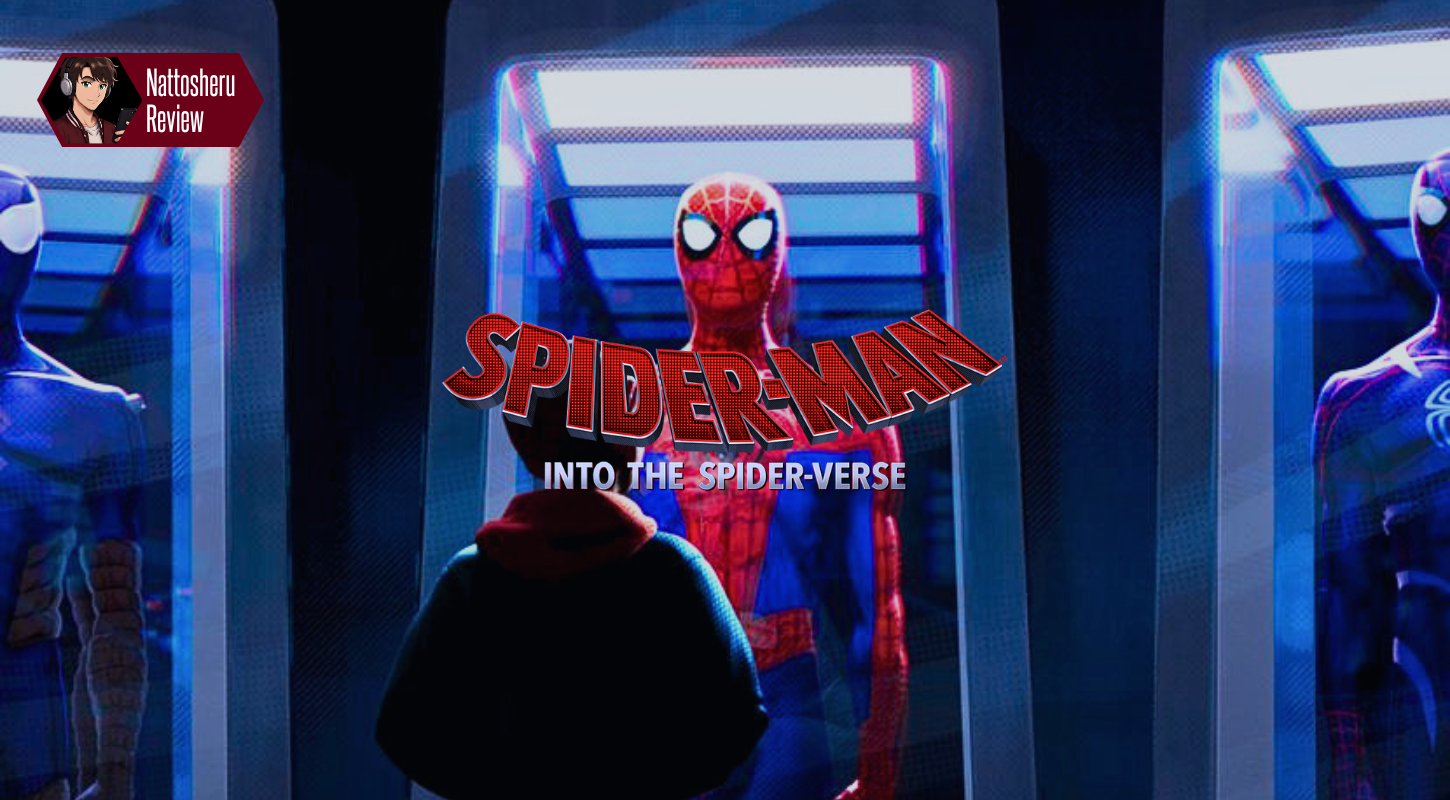
Hello, cinema fans. Today we’re back with another Spider-Man movie, but this one is very special because it’s the first installment of one of my favorite story arcs in this entire massive franchise. Based on the “Spider-Verse” comic book series from Marvel Comics, Spider-Man: Into the Spider-Verse is directed by Bob Persichetti, Peter Ramsey, and Rodney Rothman. The film was produced by Sony Pictures Animation and Columbia Pictures, in association with Marvel Entertainment. Discover one of the most entertaining and fantastic Spider-Man movies.
Hola, fanáticos del cine. Hoy volvemos con otra película más de Spider-Man, pero esta ocasión es muy especial ya que trata de la primera entrega de una de mis sagas favoritas de toda esta enorme franquicia. Basada en la línea de cómics titulada Spider-Verse de Marvel Cómics, Spider-Man: Into the Spider-Verse está dirigida por Bob Persichetti, Peter Ramsey y Rodney Rothman. La película fue producida por Sony Pictures Animation y Columbia Pictures, en asociación con Marvel Entertainment. Conoce una de las películas más divertidas y fantásticas de Spider-Man.

Source: FilmAffinity.
Plot
The film opens with a brief monologue by the great Spider-Man, who introduces himself as the famous Peter Parker, a young man who was bitten by a radioactive spider and gained spider-like powers. After giving us a summary of his life and what made him New York City’s current favorite hero, the film moves on to introduce another character: a young man of Afro-Latino descent who is passionate about art, Spider-Man, and music. This young man is named Miles Morales, and we see him trying to get to class on time at an elite boarding school where he struggles to keep up and make friends.
Trama
La película inicia con un pequeño monólogo del gran Spider-Man, quien se presenta como el famoso Peter Parker, un joven que fue mordido por una araña radioactiva y que obtuvo poderes de araña. Luego de contarnos un resumen de su vida y de lo que lo convirtió en el actual héroe favorito de la ciudad de Nueva York, vemos cómo la película prosigue con mostrarnos a otro personaje, otro joven de origen afro-latino que es fanático del arte, de Spider-Man y de la música. Este joven se llama Miles Morales y vemos cómo intenta llegar a tiempo a sus clases en un internado elitista donde le cuesta estar a la altura y tener amigos.
Trailer & Review
Here is the trailer for the movie:
https://youtu.be/g4Hbz2jLxvQ?si=IXMPVBtCKRlAuOI2
By: Sony Pictures Entertainment.
I don't quite remember how I ended up watching this movie, but what I do remember is that the first time I saw it, I wasn't alone. Back then, I was still a Spider-Man fan, as always, but with the changes that had taken place over the past decade—the cancellation of The Amazing Spider-Man series and the second reboot to incorporate the character into the Marvel Cinematic Universe—my hopes of seeing more of Peter Parker’s epic story were overshadowed by Marvel Studios’ decisions. Despite that, when I watched Spider-Man: Into the Spider-Verse, I realized right away that I had found a priceless gem of modern cinema.
While Sony has a well-known habit of making rather questionable, disappointing, and controversial decisions, we have to admit that it also gets things right when it comes to Spider-Man, its only “golden goose”. That’s why I understand why they decided to go all in on this animated project, which—without exaggeration—completely changed the way animated films are made for the big screen. Just as Sam Raimi’s Spider-Man (2002) revolutionized superhero cinema, Spider-Man: Into the Spider-Verse revolutionized the way we experience stories adapted from comics, but on the big screen.
No recuerdo bien cómo fue que llegué a ver esta película, pero lo que sí recuerdo es que la primera vez no la ví solo. En aquel entonces seguía siendo fan de Spider-Man, como siempre, pero con los cambios que hubieron en la década pasada, la cancelación de la saga de The Amazing Spider-Man y el segundo reinicio que le dieron para incorporar al personaje al Universo Cinematográfico de Marvel, mis expectativas por ver más sobre la grandiosa historia de Peter Parker fueron opacadas por las decisiones de Marvel Studio. A pesar de eso, al ver Spider-Man: Into the Spider-Verse, me dí cuenta enseguida que había encontrado una joya invaluable del cine moderno.
Si bien Sony tiene la popular costumbre de tomar decisiones bastante cuestionables, decepcionantes y polémicas; tenemos que admitir que también hace las cosas bien cuando se trata de Spider-Man, su única “gallina de los huevos de oro”. Es por eso que entiendo que se hayan decidido en apostarlo todo en este proyecto animado que, sin exagerar, cambió por completo la forma de hacer películas animadas para la pantalla grande. Así como Spider-Man (2002) de Sam Raimi revolucionó el cine de superhéroes, Spider-Man: Into The Spider-Verse revolucionó la forma de ver historias sacadas de cómics, pero en la pantalla grande.

Source: Tenor.
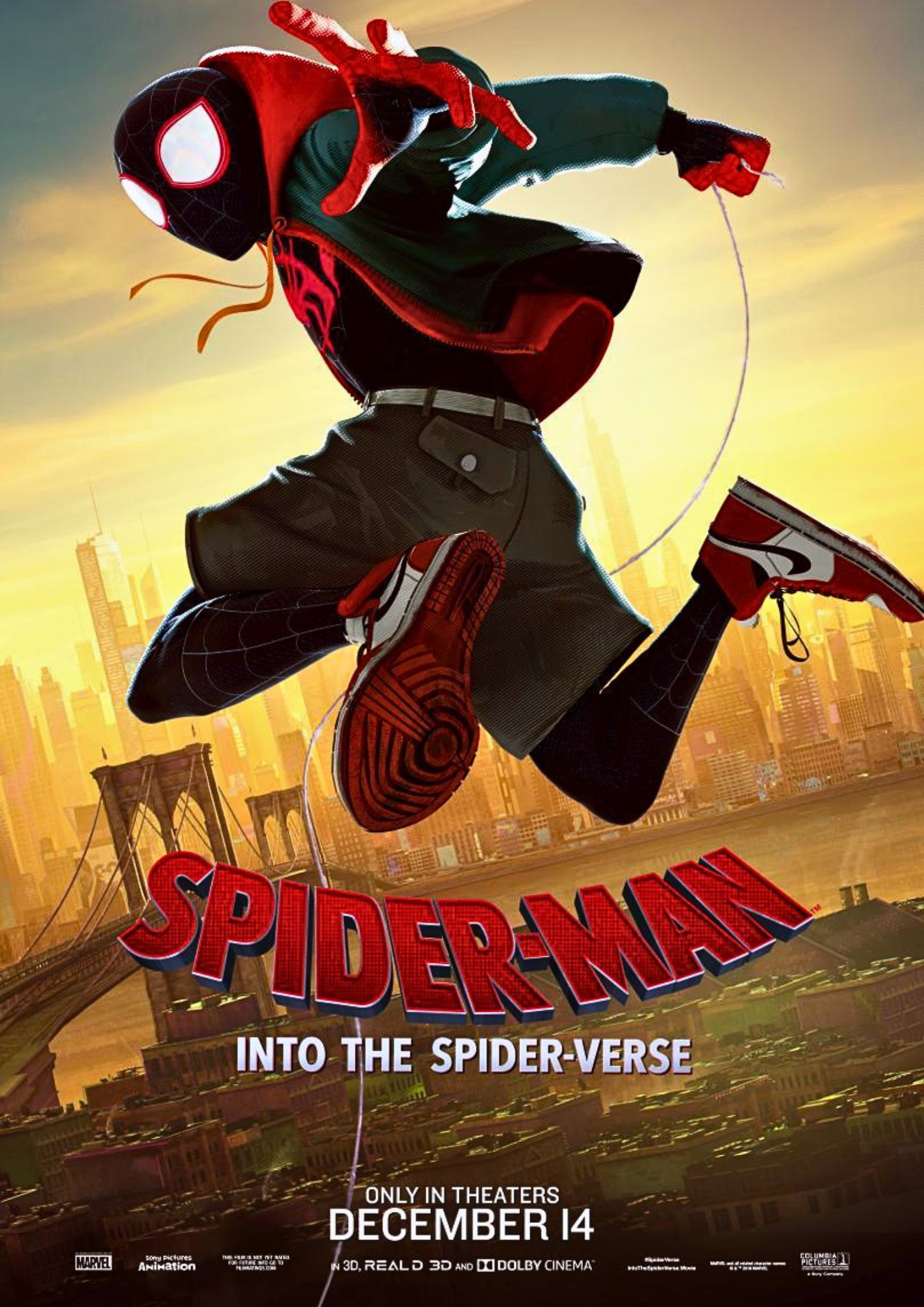
But we’ll get into that later; first, I want to talk about the story. It’s about the life of Miles Morales, a high school student attending an elite boarding school far from the neighborhood where he grew up. His parents have high expectations for him, especially his father, police officer Jefferson Davis. Miles feels out of place at his new school, far from his friends and parents. That’s how he tries to escape the routine by visiting his uncle Aaron Davis, another role model he has (besides Spider-Man). Aaron takes him to an abandoned train station where Miles decides to paint some graffiti.
It is here that a radioactive spider crawls onto Miles and bites him, causing his body to grow several centimeters the next day. He hears a voice inside him telling him what to do in the moment, and he gains the annoying ability to stick his hands to any kind of object—and even people. Seeking help, he returns to the old abandoned train station and hears noises nearby that lead him to a fight between Spider-Man, the Green Goblin, the Vulture, and Kingpin. From here on out, everything we see happen in this animated film is complete madness. A story packed with action, humor, villains, and Spider-People of all kinds.
Pero ya de esto lo iremos explicando más adelante, lo primero de lo que les quiero hablar es sobre su historia. Esta trata de la vida de Miles Morales, un chico de preparatoria que estudia en un internado de élite que queda lejos del barrio donde fue criado. Sus padres tienen unas altas expectativas puestas sobre él, sobre todo su padre, el oficial de policía Jefferson Davis. Miles se siente fuera de lugar en su nueva escuela, lejos de sus amigos y sus padres. Es así como busca escapar de la rutina visitando a su tío Aaron Davis, otra figura a seguir que tiene (aparte de Spider-Man). Aaron lo lleva a una estación de trenes abandonada donde Miles decide pintar su grafiti.
Es aquí donde una araña radioactiva se le sube a Miles y le pica, haciendo que, al día siguiente, su cuerpo se desarrolle creciendo varios centímetros, escuchando una voz en su interior que le dice qué es lo que debe hacer al momento, además de tener la molesta capacidad de pegar sus manos a cualquier tipo de objetos y hasta personas. Buscando ayuda, regresa a la vieja estación de trenes abandonada y cerca escucha ruidos que lo lleva a una lucha entre Spider-Man, Duende Verde, El Merodeador y Kingpin. A partir de aquí, todo lo que vemos suceder en esta película animada es una completa locura. Una historia repleta de acción, humor, villanos y Spider-Gente de todo tipo.

Source: Tenor.
This was one of the first attempts to bring a multiverse to the big screen with the help of Marvel Entertainment. But in this case, unlike the MCU, they actually pulled it off quite well by distilling everything into a simple story about a teenager struggling with his identity. The entire introduction and development of Miles Morales in this film is fantastic because, not only do we see a worthy successor to the iconic character behind the mask, but we also see a protagonist with whom we can easily identify. In this case, he’s not the typical nerd who gets bullied at school, but a kid who just wants to be accepted for who he is.
Aside from the clearly elitist treatment Miles receives from others—being a scholarship student from a remote Brooklyn neighborhood and coming from an Afro-Latino family—his father’s high expectations leave our protagonist feeling frustrated and fed up with everything. He seeks to escape and clear his head through graffiti, expressing his feelings with a phrase he always repeats: no expectations. At some point in our lives, any of us might feel just like Miles. Between the intense social pressure that forces us to do or become something we don’t want to, we also face the high expectations of our parents, bosses, and acquaintances.
Este ha sido de los primeros intentos de traer un multiverso a la pantalla grande gracias a la ayuda de Marvel Entertainment. Pero en este caso, a diferencia del UCM, sí les salió bastante bien la cuestión al condensar todo en una simple historia de un adolescente con problemas de identidad. Toda la introducción y desarrollo de Miles Morales en esta película es fantástica ya que, no solo vemos a un sucesor digno para el icónico personaje detrás de la máscara, sino que también vemos a un protagonista con el cual fácilmente podemos sentirnos identificados. En este caso no es el típico nerd que sufre de bullying en la escuela, sino un chico que busca ser aceptado tal y como es nomás.
Aparte del trato claramente elitista que tienen los demás con Miles al ser un becado de un barrio apartado de Brooklyn y ser de familia afro-latina, las altas expectativas que tiene su padre sobre él hacen que nuestro protagonista se sienta frustrado y harto de todo. Busca escapar y despejarse con el graffiti, logrando expresar lo que siente con una frase que repite siempre: cero expectativas. Normalmente cualquiera de nosotros podríamos llegar a sentirnos igual que Miles en cierta parte de nuestras vidas. Entre la fuerte presión social que tenemos al obligarnos a hacer o convertirnos en algo que no queremos, también tenemos las altas expectativas de nuestros padres, jefes y conocidos.

Source: Tenor.
Then there are the prejudices and closed-minded views of certain family members who go so far as to dismiss what we do or what we enjoy as “useless”. The film shows us all of this right from the start by introducing us to Miles Morales, who, to make matters worse, must now become the successor to the city’s great hero, Spider-Man. This dilemma that the film presents us with from the start is fascinating because it shows us that even a young man with low expectations and only his parents supporting him can go very far in life. Clearly, this teaches us a very valuable lesson about what we can become in our lives.
There are things in life that we see as a mountain or as a task far too big for us. This could be a job, a career, a dream, or a goal we set for ourselves years ago and now see as impossible to achieve. Miles Morales’ story shows us that nothing is impossible in life and that we can always become whatever we want, as long as we have the determination to take that “leap of faith”—because that’s exactly what it is: “a leap of faith”. Only those who step out of their comfort zone and take the risk of doing or becoming something they believe is impossible are the ones who truly succeed.
También están los prejuicios y las opiniones cerradas de ciertos familiares que llegan a idealizar lo que hacemos o lo que nos gusta como algo que “no sirve para nada”. La película nos muestra todo esto al principio al presentarnos a Miles Morales, quien para colmo, ahora tendrá que convertirse en el sucesor del gran héroe de la ciudad, Spider-Man. Dicho dilema que nos pone la película desde el principio es fascinante ya que nos muestra que, incluso un joven con pocas expectativas y con solo sus padres apoyándolo, puede llegar muy lejos en la vida. Claramente, esto nos enseña una lección muy valiosa sobre lo que podemos llegar a ser en nuestra vida.
Hay cosas en la vida que las vemos como una montaña o como un traje muy grande para nosotros. Esto puede ser un puesto de trabajo, una carrera, un sueño o una meta que nos hayamos propuesto hace años y que lo vemos como algo imposible de lograr. La historia de Miles Morales nos demuestra que nada es imposible en la vida y que siempre podremos llegar a ser lo que queramos, siempre y cuando tengamos la determinación de dar ese “salto de fé” ya que solo es eso, “un salto de fé”. Solo los que salen de su zona de confort y se arriesgan a hacer o convertirse en algo que creen imposible son los que de verdad lo consiguen.

Source: Tenor.
Another thing that really fascinates me about this movie is that we see the protagonist, Miles Morales, as a kid who’s unable to become the next Spider-Man—at least at first. He’s always making mistakes and can’t control or defend himself with his new powers. However, with the help of the other Spider-People, Miles manages to learn everything he needs to become the new Spider-Man by the end. This development is fascinating because, in the end, he ends up becoming a much stronger and more impressive version than the original Spider-Man we all know.
The movie also has a sense of humor that’s hard to ignore, especially since it plays heavily on the typical clichés and elements of every Spider-Man movie, such as the dialogue between villains, the use of webs, his senses, and so on. There’s also that cartoonish style that was incorporated so naturally throughout the film, turning it into a high-quality moving comic book. It also has its drama and plenty of action, with the Spider-People clearly taking center stage. While we see several Spider-Man variants, the ones that stand out above all are the variants of Peter B. Parker and Gwen Stacy.
Otra cosa que me fascina mucho de esta película es que vemos al protagonista, Miles Morales, como un chico incapaz de volverse el siguiente Spider-Man, al menos al principio. Siempre comete errores y es incapaz de controlar y defenderse por sí mismo con sus nuevos poderes. Sin embargo, con la ayuda de los demás Spider-Gente, Miles consigue aprender todo lo necesario para convertirse en el nuevo Spider-Man al final. Dicho desarrollo es fascinante ya que, al final, termina convirtiéndose en una versión mucho más fuerte e impresionante que el propio Spider-Man original que todos conocemos.
La película también posee un humor muy difícil de ignorar, sobre todo porque juega mucho con los típicos clichés y elementos de toda película de Spider-Man, como es el caso de los diálogos entre villanos, el uso de las telarañas, sus sentidos, etc. También está ese estilo caricaturesco que le incorporaron de forma tan natural a lo largo de la película ya que la convierte en un cómic en movimiento de altísima calidad. También tiene su drama y su excelente cantidad de acción con Spider-Gente como protagonistas, claramente. Si bien vemos a varias variantes de Spider-Man, las que destacan por sobre todos son las variantes de Peter B. Parker y Gwen Stacy.

Source: Tenor.
Both versions of Spider-Man have a much more prominent presence and development in this film, mainly because of everything they teach Miles and the relationship they develop with him. On the one hand, we see Peter B. as an adult Spider-Man—in debt, divorced, and even struggling with self-esteem issues. His regret stems from the fact that he has children, which is something he doesn’t want at the moment. The curious thing about all this is how he ends up treating Miles like a “child” whom he is guiding, caring for, and teaching throughout the film. This relationship Peter has with Miles will cause him to reevaluate his life.
On the other hand, we have Gwen Stacy, the Spider-Woman who—curiously—became quite popular after this movie. We first meet her as a funny and friendly girl, but after she tells us about her life, we see that she has many similarities with Miles: she’s a girl trying to live up to the high expectations of being a heroine in her own universe, and because of this, she can’t have friends. The bond that forms between Gwen and Miles in this film is another major incentive that helped our protagonist take that big “leap of faith.” Clearly, what motivated him most were both his father and his own spider mentor, who encouraged him.
Ambas variantes de Spider-Man tienen una presencia y desarrollo mucho más notable en esta película, más que nada por todo lo que le llegan a enseñar a Miles y la relación que llegan a tener también. Por un lado, vemos a Peter B. como un Spider-Man ya adulto, endeudado, divorciado y hasta con problemas de autoestima. Su arrepentimiento se debe al hecho de tener hijos, lo cual es algo que no desea por el momento. Lo curioso de todo esto es cómo llega a tratar a Miles como un “niño” al cual está guiando, cuidando y enseñando durante toda la película. Dicha relación que tiene Peter con Miles lo hará reevaluar su vida.
Por otro lado, tenemos a Gwen Stacy, la Spider-Woman que llegó a popularizarse bastante -curiosamente- luego de esta película. A ella la conocemos al principio como una chica graciosa y amigable, pero luego de contarnos su vida, vemos que tiene muchas similitudes con Miles al ser una chica que busca cumplir con las altas expectativas de ser una heroína en su propio universo y que debido a esto no puede tener amigos. Dicha relación que forman Gwen y Miles en esta película es otro gran incentivo que ayudó a nuestro protagonista a dar ese gran “salto de fé”. Claramente, lo que más lo motivó fue tanto su padre como su propio maestro arácnido quienes le dieron aliento.

Source: Tenor.
Among the many things that fascinated me about this movie are the numerous references and Easter Eggs to other Spider-Man films, especially Sam Raimi’s Trilogy and Marc Webb’s Spider-Man. We see that the Spider-Man we meet at the beginning of the film is like a more “perfect” version of the hero (with some nods to Tobey Maguire’s Spider-Man), compared to those from other dimensions. In contrast, Peter B. Parker’s Spider-Man seems more like a version of Andrew Garfield’s, but now fully grown and a bit scruffy. Clearly, these versions and references are more inspired by the character’s comics.
By the way, as for the villains, the film doesn’t hold back at all and introduces us to a whole variety of enemies familiar from the Spider-Man comics. Among those we see throughout the film are the Green Goblin, the Vulture, Dr. Octopus, Scorpion, and Kingpin. Despite this variety of villains, the ones that stand out the most are the Vulture, Doctor Octopus, and Kingpin. They all have their moments and are developed throughout the film, but the one who makes the biggest impact is the Vulture because of how close he ends up becoming to Miles Morales. Aside from that, I think Kingpin is the greatest villain of them all, and I don’t say that because of his size, but also because of his presence and influence.
Entre otras tantas cosas que me fascinaron de esta película, están la gran cantidad de referencias y Easter-Eggs a otras películas de Spider-Man, en especial de la trilogía de Sam Raimi y la versión de Spider-Man de Marc Webb. Vemos que el Spider-Man que conocemos al principio de la película es como una versión más “perfecta” del héroe (con algunas referencias al Spider-Man de Tobey Maguire), comparado con el de las demás dimensiones. En cambio, el Spider-Man de Peter B. Parker parece más como una versión del de Andrew Garfield, pero ya todo adulto y descuidado. Claramente, dichas versiones y referencias son más inspiradas en los cómics del personaje.
Por cierto, en cuanto a los villanos, la película no se limita para nada y nos presenta a toda una variedad de enemigos conocidos en los cómics de Spider-Man. Entre los que llegamos a ver a lo largo de la película están el Duende Verde, el Merodeador, la Dra. Octopus, Escorpión y Kingpin. A pesar de dicha variedad de villanos, los que más se destacan son el Merodeador, la Dra. Octopus y Kingpin. Todos tienen su tiempo de presencia y desarrollo a lo largo de la película, pero el que más impacta es el Merodeador debido a lo cercano que termina siendo con Miles Morales. Aparte de esto, creo que Kingpin es el mayor villano de todos y no lo digo por su tamaño, sino también por su presencia e influencia.

Source: Tenor.
Last but not least, another aspect of Spider-Man: Into the Spider-Verse that really captivated me was its audiovisual presentation. As I mentioned earlier, this gem completely revolutionized the way superhero animated films are made—and it wasn’t by a small margin. The massive production and animation effort was incredible, thanks to the way they blended 3D animation (CGI) with the drawing styles, visual effects, and color palette typical of comics and traditional (2D) animation. Both the producers and animators really went above and beyond to make every second of the film look like a high-definition animated comic book.
The motion effects, the use of light and shadow, and the vibrant and varied color palette are fascinating. The same goes for the character design, especially that of the different Spider-Man variants and the villains. There are a few characters whose appearance I don’t quite like, such as the Green Goblin, but there are others like Kingpin and the Vulture whose looks I really love. The attention and care they put into every visual detail, every panel, and every motion effect is impressive. The sound effects are no slouch either, but what I found most fascinating was the soundtrack. Anyway, I’m recommending this animated Spider-Man movie, which I’m sure you’ll really enjoy.
Personally, I give it a 9.5/10 rating within the superhero genre.
Por último, pero no menos importante, otra de las cosas que también me fascinaron mucho de Spider-Man: Into The Spider-Verse es su apartado audiovisual. Al principio les mencioné que esta joya cambió por completo la forma de hacer películas animadas de superhéroes y no fue por poco. El enorme trabajo de producción y animación fue increíble debido a la manera en la que mezclaron la animación en 3D (CGI) con estilos de dibujo, efectos visuales y coloreado común en cómics y animación tradicional (2D). Tanto los productores como los animadores se las ingeniaron bastante para hacer de cada segundo de película pareciera un cómic animado en alta definición.
Los efectos de movimiento, el uso de luces y sombras y la paleta de colores vivos y variados son fascinantes. Lo mismo sucede con el diseño de los personajes, sobre todo el de las variantes de Spider-Man y los villanos. Hay uno que otro personaje que no me termina de agradar su apariencia como lo es el Duende Verde, pero también hay otros como Kingpin y el Merodeador que me encantan bastante cómo se ven. La atención y cuidado que le tuvieron a cada detalle visual, cada panel y cada efecto de movimiento es impresionante. Los efectos de sonido tampoco se quedan atrás, pero lo que considero que me fascinó más fue su banda sonora. En fin, les dejo esta película animada de Spider-Man que de seguro les gustará bastante.
Personalmente, le doy una calificación de 9.5/10 en lo que respecta al género de superhéroes.
Tell me, have you seen this movie yet? What did you think of it? You can leave your answer in the comments.
Dime, ¿ya has visto esta película? ¿Qué te ha parecido? Puedes dejarme tu respuesta en los comentarios.
| CREDITS | SOURCES |
|---|---|
| Cover, Banners and Separators: | Canva. |
| GIF Edited by: | InShot. |
| Traslated by: | DeepL Translate. |
| Character Art by: | Ushiro Snow |
| Character Created by: | Bing Image Generator. |
| Markdown Tool: | Hive Studio. |


6 comments
═══════════ ✦✧✦ ═══════════
💙 Curating Hive with Ecency 💙
═══════════ ✦✧✦ ═══════════
Thank you! 🤗
via Apps from
Siempre que puedo regreso a esta peli, lo que mas me llama la atención junto a la animación son los ángulos que escogieron para mostrar las cosas y los personajes, creo que eso hace que destaque mucho.
!LADY
View or trade
LOHtokens.@soyernesto, you successfully shared 0.1000 LOH with @nattosenpai and you earned 0.1000 LOH as tips. (4/4 calls)
Use !LADY command to share LOH! More details available in this post.
Tienes razón, tiene muy buenos ángulos. Es como si buscaran darle ese toque caricaturesco de los cómics, pero a la vez sin dejar lo cinematográfico a un lado.
Muchas gracias por tu comentario y apoyo.