Spider-Man: Across the Spider-Verse (2023) | Nattosheru Review [ENG/SPA]


Hello, Spider-Man fans. Today I’m bringing you one of the best movies featuring our favorite hero from both the comics and the world of film and entertainment. That’s right, I’m talking about Spider-Man. Directed by Joaquín Dos Santos, Kemp Powers, and Justin K. Thompson, Spider-Man: Across the Spider-Verse was produced by Columbia Pictures and Sony Pictures Animation. Like its predecessor, this film features the voices of Shameik Moore, Hallee Steinfeld, Oscar Isaac, Issa Rae, Jake Johnson, and Jason Schwartzman. Discover the movie that expanded the Spider-Man multiverse forever.
Hola, fanáticos de Spider-Man. Hoy les traigo una de las mejores películas de nuestro héroe favorito tanto de los cómics como del mundo del cine y el entretenimiento. Así es, les estoy hablando de Spider-Man. Dirigida por Joaquín Dos Santos, Kemp Powers y Justin K. Thompson; Spider-Man: Across the Spider-Verse fue producida por Columbia Pictures y Sony Pictures Animation. Al igual que su antecesora, esta película cuenta con las voces de Shameik Moore, Hallee Steinfeld, Oscar Isaac, Issa Rae, Jake Johnson y Jason Schwartzman. Conoce la película que expandió el multiverso de Spider-Man para siempre.

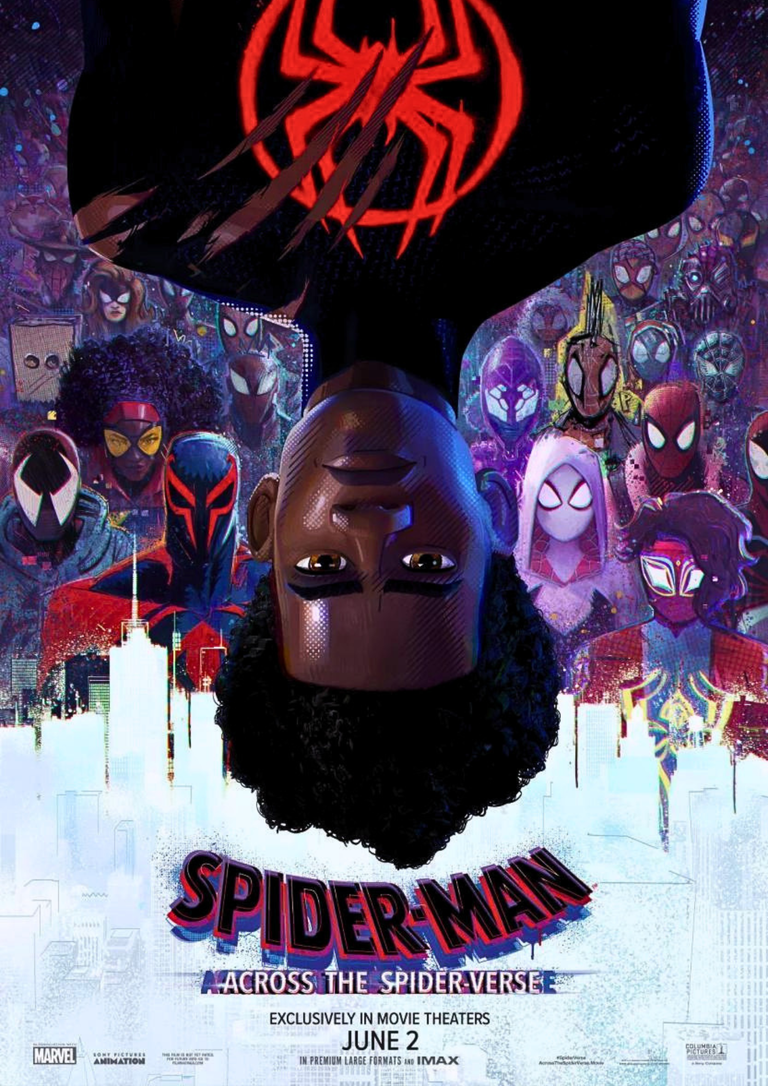 Source: FilmAffinity.
Plot
The film opens with a monologue by Gwen Stacy, who tells us about her life as Spider-Woman—a life that hasn’t been easy—and explains that this is why she fully understands what our protagonist, Miles Morales, is going through. Gwen reveals that, some time ago, she accidentally killed her best friend, Peter Parker, who in her universe had become the Lizard. Because of this, and because her father, Captain George Stacy, was present at the time, Gwen is constantly on the run from the police, who believe she is a murderer. However, one day, an incident involving a villain from another universe causes Gwen to reveal her identity to her father.
Trama
La película inicia con un monólogo de Gwen Stacy, quien nos habla de su vida siendo Spider-Woman, la cual no ha sido tan fácil y que es debido a esto que comprende perfectamente lo que vive nuestro protagonista, Miles Morales. Gwen nos cuenta que, hace tiempo, ella asesinó por error a su mejor amigo, Peter Parker, quien en su universo se había convertido en el Lagarto. Debido a esto y a que su padre, el Capitán George Stacy, estuvo presente en ese momento, Gwen huye constantemente de la policía debido a que piensan que es una asesina. Sin embargo, un día, un incidente con un villano que viene de otro universo hace que Gwen revele su identidad ante su padre.
Trailer & Review
Here is the trailer for the movie:
As I’ve told you before, I’m not a big fan of modern movies, but I do have my exceptions, and this is one of them. Given the success of Spider-Man: Into the Spider-Verse, the news of a sequel really excited me, and it was one of the few movies from this decade that I actually ended up watching—though this time, I went alone. The trailer was a “BOOM” because it gave us the impression that they were going to expand the Spider-Man multiverse like never before—and boy, did they pull it off. Not only that, but it also gave us a ton of references, Easter eggs, crossovers, and some pretty fantastic moments.
But what I loved most about this Spider-Verse sequel is the way they expanded the main plot and connected it to everything we see throughout the nearly two-and-a-half-hour film. It begins by telling us the familiar story of Gwen Stacy (Spider-Woman), who, after the events of the previous film, is seen trying to cope with her hectic life as a hero. However, following a tragic encounter with a multidimensional villain, her father—a police captain—discovers Gwen’s true identity, and she has no choice but to leave her universe.
Como ya les he contado antes, no soy muy fan de ver películas modernas, pero tengo mis excepciones y esta es una de ellas. Debido al éxito que consiguió Spider-Man: Into The Spider-Verse, la noticia de una secuela me emocionó mucho y fue de las pocas películas de esta década que llegué a ver, aunque esta vez solo. Su trailer fue un ‘“BOOM” ya que nos pintó la idea de que iban a expandir el multiverso de Spider-Man como nunca antes se ha he hecho y vaya que lo lograron muy bien. Y no solo eso, sino que también nos dió una gran cantidad de referencias, Easter Eggs, crossovers y momentos bastante fantásticos.
Pero lo que más me encantó de esta secuela del Spider-Verse es la forma en la que extendieron la trama principal y la conectaron con todo lo que vemos a lo largo de las casi dos horas y media de película. Empieza contándonos la ya conocida historia de Gwen Stacy (Spider-Woman) quien, después de los sucesos ocurridos en la cinta anterior, la vemos intentar sobrellevar su ajetreada vida como heroína. Sin embargo, tras un momento trágico con un villano multidimensional, su padre y capitán de policía descubre la verdadera identidad de Gwen y ella no tiene otra opción que irse de su universo.
 Source: Tenor.
Who does Gwen go with? Well, with a much darker and more imposing version of Spider-Man named Miguel O'Hara (Spider-Man 2099) and Jessica Drew, a pregnant African American woman who rides a motorcycle and also goes by the name Spider-Woman. They argue until Miguel agrees to let Gwen go with them, so she uses her special bracelet to open a multidimensional portal and leave. A little over a year later, we return to Brooklyn, New York, in the main universe of our protagonist, Miles Morales, who also tells us how things have been going for him as the new Spider-Man.
One of the things I loved most about this movie is that, for an animated comedy with superheroes and all that, it’s very, very well done. I say this mainly because of its plot and how the script is written. The very logical way (aside from the typical clichés of any Spider-Man story) of presenting all the events that unfold throughout this film is fascinating. Not only because it offers a solid character development for some of the main characters, such as Gwen Stacy, Miguel O'Hara, and even Miles Morales himself, whom we see going through quite an odyssey.
¿Con quién o quiénes se va Gwen? Pues con una versión mucho más oscura e imponente de Spider-Man llamado Miguel O'Hara (Spider-Man 2099) y Jessica Drew, una afroamericana embarazada que anda en motocicleta y que también se hace llamar Spider-Woman. Ambos discuten hasta que Miguel acepta que Gwen vaya con ellos, así que utiliza su brazalete especial y abre un portal multidimensional para irse. Poco más de un año después, volvemos a Brooklyn, Nueva York, en el universo principal de nuestro protagonista, Miles Morales, quien nos cuenta también cómo le ha ido siendo el nuevo Spider-Man.
Una de las cosas que más me encantaron de esta película es que, para ser una cinta animada de humor con superhéroes y todo eso, está muy, pero muy bien hecho. Lo digo principalmente por su trama y cómo está escrito su guión. La manera tan lógica (exceptuando los clichés típicos de toda historia de Spider-Man) de contarnos todos los eventos ocasionados a lo largo de esta película es fascinante. No solo por el hecho de que nos ofrece un buen desarrollo a algunos de los personajes principales como lo son Gwen Stacy, Miguel O'Hara y hasta el mismo Miles Morales quien lo vemos vivir una odisea.
 Source: Tenor.
While the film introduces us to an established villain like the Stain, we can also sense a certain mystique surrounding Miles, Gwen, and Miguel O'Hara's Spider-Society. All of this leads to the darker version of Spider-Man ultimately becoming a sort of antihero because of his super-radical approach to things. But what stands out most about all this is the narrative that unfolds throughout the film. This narrative—or debate—challenges the very logic of all the Spider-Man stories we know from comics, video games, and TV series.
This is fascinating, not only because it’s eye-catching, but also because we see an internal struggle within an entire society of arachnid heroes who are supposed to share the same goal, yet when it comes down to it, they end up sacrificing others “for the greater good.” I love all of this because the film not only shows us a vast, enormous array of Spider-Man versions from other universes—many of which are even references to the comics, TV series, and video games of this franchise—but also because we see how our protagonist struggles and confronts the radical moral logic of this arachnid society.
Si bien la película nos presenta a un villano ya definido como lo es La Mancha, también podemos notar cierto misticismo entre Miles, Gwen y la Sociedad Arácnida de Miguel O'Hara. Todo esto para que, al final, veamos a la versión más oscura de Spider-Man convirtiéndose en una especie de antihéroe debido a su manera súper radical de hacer las cosas. Pero lo que más llama la atención de todo esto es la narrativa que vemos construyéndose a lo largo de la cinta. Dicha narrativa o debate que vemos desafía la propia lógica que tienen todas las historias de Spider-Man que conocemos en cómics, videojuegos y series de televisión.
Esto es fascinante, no solo porque llama atención, sino también porque vemos una lucha interna entre toda una sociedad de héroes arácnidos que se supone tienen un mismo objetivo, pero al momento de hacer las cosas terminan sacrificando a otros “por el bien de muchos”. Me encanta todo esto ya que, no solo la película nos muestra un caudal inmenso, gigantesco de versiones de Spider-Man de otros universos, entre los cuales muchos son hasta referencias de los mismos cómics, series de televisión e incluso videojuegos de esta franquicia. No solo eso, sino que también vemos cómo nuestro protagonista lucha y se enfrenta ante esa lógica moral y radical que tiene esta sociedad arácnida.
 Source: Tenor.
I think it goes without saying why I consider this gem one of the best Spider-Man movies of all time. I’m not just saying this to exaggerate like a robot or an AI; I’m saying it because that’s exactly how I feel and what I think of this film. And not only that, but we also see excellent character development in the relationship between Miles and Gwen, who at first reunite after a long time apart, but then drift apart due to differences of opinion and secrets between them. Anyone would say they have the typical romantic relationship that every protagonist has.
But I don’t think that’s the case, at least not based on what we’ve seen so far. We’re not just dealing with a moral struggle over who should be saved and who shouldn’t, but we also see the development of what could become the best version of Spider-Man we’ve ever seen. Another thing I really like about this movie is how it gives time and importance to its supporting characters, such as Miles’ parents, for example. Especially his mother, who has the greatest influence on our protagonist and motivates him to forge his own path, even though this completely defies everything a typical Spider-Man is supposed to do.
Creo que no hace falta decir más para reconocer ya el por qué llamo a esta joya una de las mejores películas de Spider-Man de toda la historia. Yo no digo las cosas por exagerar nomás como un robot o una IA, lo digo porque es así tal cual como yo siento y pienso que es esta cinta. Y no solo eso, sino que también podemos ver un desarrollo excelente entre la relación que tienen Miles y Gwen, quienes al principio vemos que se reencuentran después de mucho tiempo, pero luego se alejan debido a diferencias de opinión y secretos entre ellos. Cualquiera diría que tienen la típica relación amorosa que tiene todo protagonista.
Pero yo no creo que así sea, al menos no con todo lo que se ha podido ver hasta ahora. No solo estamos ante una lucha moral sobre quién debe ser salvado y quién no, sino que también vemos el desarrollo del que puede llegar a ser la mejor versión de Spider-Man que hemos visto en la historia. Otra cosa que me gusta bastante de esta película es cómo le dan su tiempo e importancia a sus personajes secundarios, como lo son los padres de Miles, por ejemplo. Especialmente su madre, quien es la que más llega a influir en nuestro protagonista y lo motiva a tomar su propio camino, a pesar de que esto desafíe por completo todo lo que un Spider-Man común debe de hacer.
 Source: Tenor.
I don't think your'll fully grasp the moral and emotional significance conveyed by this magnificent film, which is not only made for fans of the entire Spider-Man franchise but also serves as a sort of critique of some of the clichés found in most adaptations of our favorite hero. For example, all that talk of “canon events” is one of the things most frequently mentioned throughout the film, yet it ultimately ends up making no sense. But if we look beyond what we see here, we understand that the film raises the theme of going against what others force you to do.
That idea of “charting your own path” and “not letting yourself be influenced by what others say” are emotionally powerful phrases that stay with us long after the movie ends. Miles Morales’s story may be as fantastic as it is turbulent and quite complicated, but it also holds several valuable lessons about knowing yourself and figuring out who you’ll become in the future. “Don’t let anyone tell you who you are or what you have to do” is a phrase that, in my opinion, carries a weight similar to the iconic line “with great power comes great responsibility.” This is how this Spider-Verse sequel manages to be even better than its predecessor.
No creo que lleguen a comprender del todo el significado moral y emocional que transmite esta grandiosa película, la cual se puede decir que no solo está hecha para los fans de la franquicia entera de Spider-Man; sino que sirve también como una especie de crítica a algunos clichés que tienen la mayoría de adaptaciones de nuestro héroe favorito. Por ejemplo, todo eso de los “eventos canónicos” son una de las cosas que más se mencionan a lo largo de la película y que al final terminan sin tener sentido. Pero si lo vemos más allá de lo que llegamos a ver aquí, entendemos que la cinta nos plantea el tema de ir en contra de lo que los demás te obligan a hacer.
Esa manera de “trazar tu propio camino” y “no dejarte influenciar por lo que digan los demás” son frases emotivamente fuertes que nos quedan impregnadas en la mente al final de la película. La historia de Miles Morales puede ser tanto fantástica como turbulenta y bastante complicada, pero también posee varias lecciones valiosas sobre conocerse a uno mismo y saber qué seremos en el futuro. “Que nadie te diga quién eres y qué tienes que hacer”, es una frase que, considero yo, tiene un peso similar a la icónica frase de “un gran poder conlleva una gran responsabilidad”. Es así como esta secuela de Spider-Verse llega a ser incluso mejor que su antecesora.
 Source: Tenor.
We also get to meet new characters in addition to the film’s many cameos—such as Hindu Spider-Man and Spider-Punk, for example. As for the latter, while he initially seems like an illogical, flamboyant, and funny character, he ends up becoming a highly influential figure by the end of the film. He comes across as a rebellious, free-spirited individual who dislikes labels and societies of any kind. Even so, his mere presence in the Spider-Society makes everything he says seem somewhat nonsensical. However, in the end, we see that his presence influences Miles in a certain way, leading him to ultimately decide to go against everything and everyone.
The film also maintains that tone and sense of humor that suited its predecessor so well. However, we can see that they manage to balance the jokes and funny moments very well so as not to hinder or overshadow the film’s other dramatic and fascinating moments. This perfect blend of humor, action, and drama is absolutely excellent. The same goes for the way they introduce and develop their characters. But what’s most fascinating is how they ended up developing our protagonist, who even comes to be considered a “mistake”—a Spider-Man who “shouldn’t exist.”
También tenemos la oportunidad de conocer a nuevos personajes aparte de los muchos cameos que tiene la película- como lo son el Spider-Man Hindu y el Spider-Punk, por ejemplo. En cuanto a este último, si bien al principio parece ser un personaje ilógico, llamativo y gracioso; termina convirtiéndose en un influyente muy destacable al final de la película. Se presenta como alguien rebelde y liberal que no le gustan las etiquetas ni las sociedades de ningún tipo. Aún así, su mera presencia en la Sociedad Arácnida denota algo de sinsentido a todo lo que dice. Sin embargo, al final, vemos que su presencia influye de cierto modo a Miles quien termina decidiendo ir en contra de todo y de todos.
La película también mantiene ese tono y sentido del humor que le quedó tan bien a su antecesora. Sin embargo, podemos ver que logran equilibrar muy bien los chistes y los momentos graciosos para no entorpecer u opacar otros momentos dramáticos y fascinantes que tiene la misma. Dicha mezcla perfecta de humor, acción y drama es excelente hasta más no poder. Lo mismo sucede con la forma en la que presentan y desarrollan a sus personajes. Pero lo más fascinante es cómo terminaron desarrollando a nuestro protagonista, quien incluso llega a ser considerado como un “error”, un Spider-Man que “no debería de existir”.
 Source: Tenor.
Not to mention its ending, which is one of the best endings I’ve seen in a superhero movie to date. One thing I can tell you without spoiling anything for those who haven’t seen this masterpiece yet is that the ending serves as both a masterful conclusion and a teaser for what we’ll see in the third and upcoming installment of this amazing animated saga. So it looks like this Spider-Man special will have to wait a while so I can wrap things up properly when I watch and talk about Beyond the Spider-Verse. By the way, because this movie ended so brilliantly, I have such high expectations for the next one that it’s actually making me a little nervous.
Last but not least, let’s talk about what made this film a masterpiece of modern animation. Its audiovisuals are insane, far more fascinating than its predecessor—and that’s saying a lot. From the varied animation techniques and art styles used in each universe to the immense and countless number of designs for all the Spider-People variants we see in this film, it’s simply breathtaking. Just by looking at the enormous amount of detail this film has from start to finish, we can perfectly understand why it took so long to produce.
Eso sin mencionar su final, el cual es de los mejores finales que he visto en una película de superhéroes hasta la fecha. Una cosa que sí les puedo decir sin darle ningún spoiler para los que aún no han visto esta obra maestra es que, dicho final, es un cierre magistral y una introducción a su vez de lo que llegaremos a ver en la tercera y futura entrega de esta grandiosa saga animada. Así que parece que este especial de Spider-Man tendrá que esperar un tiempo para así poder concluir de una excelente manera cuando vea y hable de Beyond The Spider-Verse. Por cierto, por la manera tan excelente que terminó está película tengo tantas expectativas para la siguiente que incluso me preocupa a su vez.
Por último, pero no menos importante, hablemos ahora de lo que convirtió a esta película en una obra maestra de la animación moderna. Su apartado audiovisual es una locura, mucho más fascinante que su antecesora y eso ya es decir mucho. Desde los variados métodos de animación y estilos de arte que utilizaron en cada universo, hasta el inmenso e incontable número de diseños de todas las variantes de Spider-Gente que vemos en esta película es impresionante hasta nada no poder. Con solo fijarnos en la enorme cantidad de detalles que tiene esta película de inicio a fin comprendemos perfectamente por qué se demoraron tanto en producirla.
 Source: Tenor.
Both the production studios and the animators who worked on this film really outdid themselves, thanks to the sheer number of shots, visual effects, art styles, and color palettes it features. Another fascinating detail is that everything we see is a blend of 3D animation with traditional drawing and animation styles—a real treat for fans. Not only did they adapt the comic book style to a specific universe, but they also managed to vary their style for other universes in a very creative way. The sound effects are also excellent in this film, though nothing compared to the soundtrack, to be honest. Anyway, here’s one of the best Spider-Man sequels you have to see.
Personally, I give it a well-deserved 10/10 rating when it comes to the superhero genre.
Tanto los estudios a cargo como los animadores que trabajaron en esta película se lucieron bastante debido a la cantidad de planos, efectos virales, estilos de dibujo y artes y paletas de colores que tiene. Otro detalle fascinante es que todo lo que vemos es una mezcla de animación en 3D con estilos de dibujo y animación tradicional es fanático. No solo dejaron el estilo de cómics para un universo en específico, sino que también consiguieron variar su estilo para otros universos de una forma bastante creativa. Los efectos de sonido son también excelentes en esta película, aunque nada comparado con la banda sonora que tiene, la verdad. En fin, aquí les dejo una de las mejores secuelas de Spider-Man que tienen que ver.
Personalmente, le doy una merecida calificación de 10/10 en lo que respecta al género de superhéroes.
Tell me, have you seen this movie yet? What did you think of it? You can leave your answer in the comments.
Dime, ¿ya has visto esta película? ¿Qué te ha parecido? Puedes dejarme tu respuesta en los comentarios.
| CREDITS | SOURCES |
|---|---|
| Cover, Banners and Separators: | Canva. |
| GIF Edited by: | InShot. |
| Traslated by: | DeepL Translate. |
| Character Art by: | Ushiro Snow |
| Character Created by: | Bing Image Generator. |
| Markdown Tool: | Hive Studio. |

Excelente reseña, con esa maravillosa calidad a la que nos tienes acostumbrados. Pareces un... detective cinéfilo al que no se le escapa nada pero que respeta el final de la película como "secreto sumarial" y después de la detallada exolicación quedamos convencidos de que "hay qué verla".
Gracias por el tiempo dedicado a poder presentarnos un trabajo de calidad. Éxito.
Muchas gracias. 🤗