The silent chip war.

The silent chip war.


AI


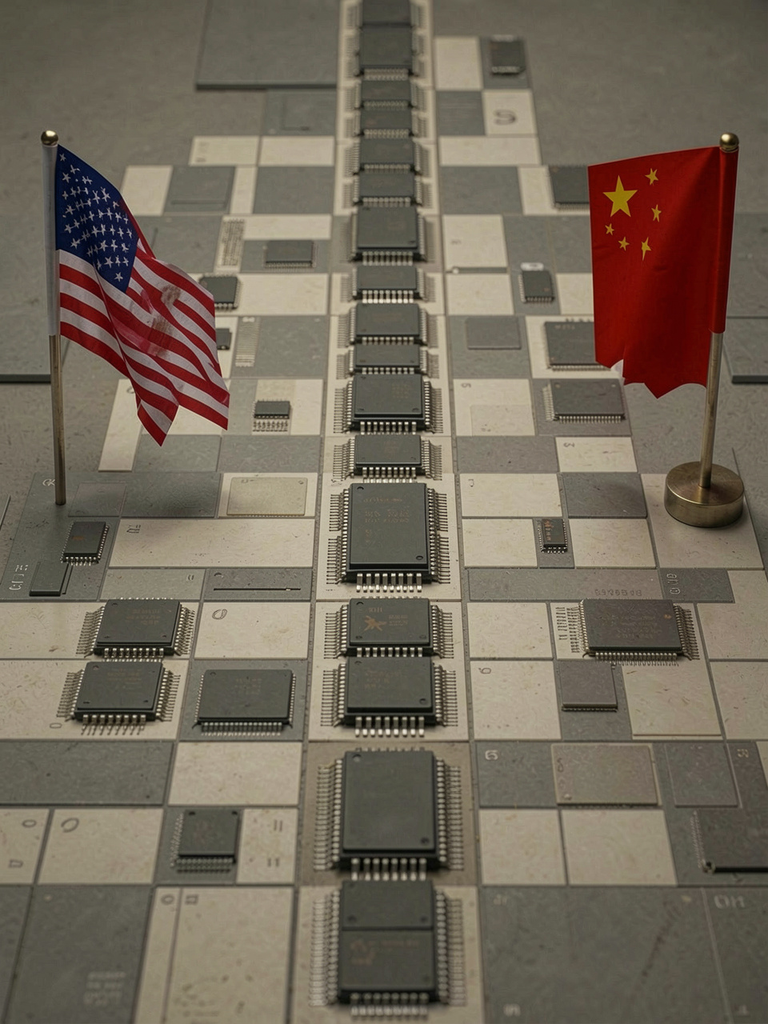
In April, during a high-level meeting between Donald Trump and Xi Jinping in Beijing, the US government approved licenses for Chinese companies to buy advanced artificial intelligence chips from Nvidia. At first glance it seems like just a commercial negotiation, but perhaps this reveals something much bigger about the current technological moment, because in recent years semiconductors have become the modern equivalent of strategic oil, who controls the most advanced chips.


It controls current training, military infrastructure, scientific research and economic power. And at the center of this dispute is Nvidia. The export-approved H200 chips are among the most powerful AI processors currently available. Chinese companies such as Alibaba, Tencent, Bikedance, GDG.com were authorized to acquire them under strict rules imposed by the United States.


Only there is an important detail in all this, at the same time that Washington partially releases these sales, the United States continues to try to limit Chinese technological advance in areas considered strategic, especially artificial intelligence and semiconductors, that is, the relationship seems less and less like a traditional economic partnership and more and more like a delicate balance between cooperation and technological containment.


And perhaps this becomes even clearer when observing the context of the meeting between Trump and Xi Jinping itself: in addition to artificial intelligence, the leaders discussed global conflicts: Taiwan, international security and the reorganization of economic influence between the two largest powers on the planet. At various times the meeting oscillated between public diplomacy and silent geopolitical tension, because deep down, both countries know that the AI ​​race stopped being just technology and became a dispute over future sovereignty.


Souce

Posted Using INLEO


0
0
0.000
0 comments