Transfer the human mind into a robot.

avatar

Transfer the human mind into a robot.
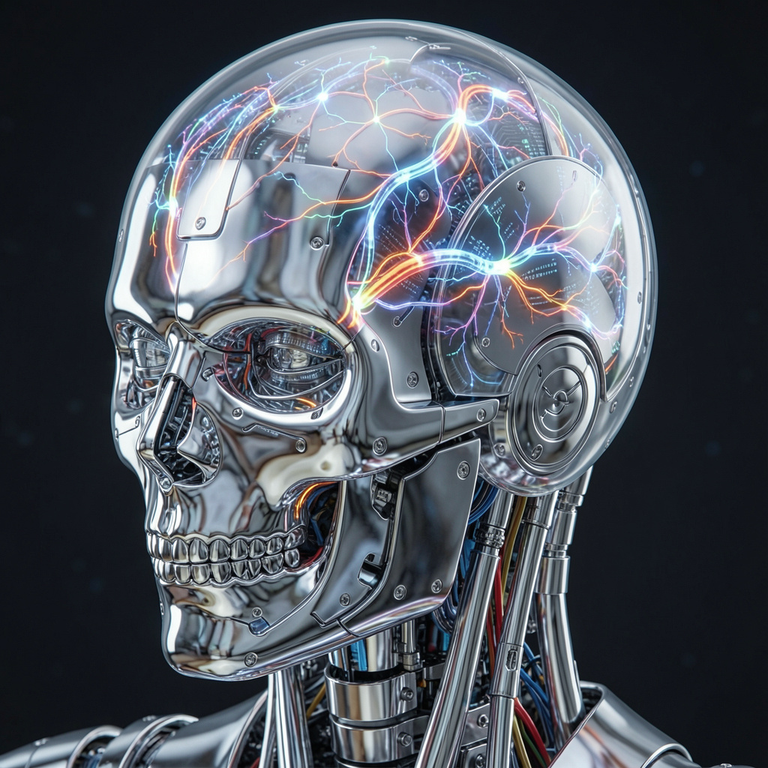


There's a huge difference between controlling a robot with your brain and transferring an entire human mind into it, but in recent months that line has resurfaced at the center of the tech debate after Elon Musk suggested an idea, which at first glance seems pretty crazy, to use Neuralink technology to capture a full snapshot of the human brain and instantiate it inside the Tesla Optimus robot.


The proposal revived an ancient question of humanity. Can consciousness be transferred? The most interesting thing is that this time the discussion involves neuroscientists, multi-million dollar AI investment companies and even international legal debates, except that there is a huge chasm between the futuristic vision and current technical reality.


The human brain has nearly 86 billion neurons connected through more than 100 trillion synapses; every memory, emotion, habit, perception, and personality trait emerges from these extremely dynamic connections. Although the idea seems fascinating, the scientific community urges caution.


Renowned Brazilian neuroscientist Miguel Nicolelis, for example, publicly criticized Musk's idea, stating that the concept still belongs much more to the realm of science fiction than practical engineering, because current systems are a long way from understanding the brain with sufficient resolution for anything resembling a complete emulation of the human mind.


Today Neuralink implants operate with about 1000 neural reading channels, that is already extremely impressive for medical applications, people manage to move cursors, control prostheses, theft and even write using brain signals, but there is a gigantic difference between interpreting specific motor commands and capturing consciousness, autobiographical memory, subjective identity and complete emotional experiences, it is more or less like trying to build an entire ocean by observing just a few drops of water.


And even from a computational point of view, the challenges are absurd, a complete brain simulation would require massive computational capabilities, probably on a hexaflo scale, in addition to extremely detailed biological models that science simply does not yet possess, despite the physical and biological challenges, the financial market is betting big on this merger, Data from Predance Research shows that the brain-computer interfaces sector was valued at almost $3 billion, maintaining double-digit growth projections up to 2035.


All this driven not only by the search for so-called digital consciousness, but also by real applications in medicine, rehabilitation, motor and communication of praying, at the same time, companies invest billions in a humanoid robotic, hoping to transform those machines into physical platforms for advanced AI, and it is exactly here where the discussion becomes more philosophical than technological, because even if one day it were possible to perfectly copy all the information of the human brain, that would really be you.


Philosophers such as Susan Schneider argue that a perfect digital copy may not represent continuity of the original consciousness, it would be just another entity with the same initial memories and behaviors, but subjectively separated from the biological individual. In other words, the mental clone may not be immortality, perhaps it is just reproduction, and it is precisely that type of dilemma that is beginning to worry governments and international organizations. Discussions about neuro-rights, protection of brain data and mental integrity, already appear in debates linked to UNESCO and in legislative proposals in countries such as Chile and some European nations.


Why are human thoughts beginning to become data potentially accessible by digital systems for the first time in history? However, it is noteworthy that although the total transfer of consciousness is still extremely distant, the technology built on the path towards it is already changing medicine, robotics and the very relationship between brain and machine. Perhaps the mind clone never happens exactly as we imagine, but the simple fact that scientists and companies are trying to transform neural activity into a computational interface already represents one of the most profound changes in human history.


And you tell me, if science proves that the robot would inherit your feelings and everything else, would you make the clone of your consciousness.


Sorry for my Ingles, it's not my main language. The images were taken from the sources used or were created with artificial intelligence


Posted Using INLEO


0
0
0.000
1 comments
avatar

Thanks for your contribution to the STEMsocial community. Feel free to join us on discord to get to know the rest of us!

Please consider delegating to the @stemsocial account (85% of the curation rewards are returned).

Consider setting @stemsocial as a beneficiary of this post's rewards if you would like to support the community and contribute to its mission of promoting science and education on Hive. 
 

0
0
0.000
